
Kedesha
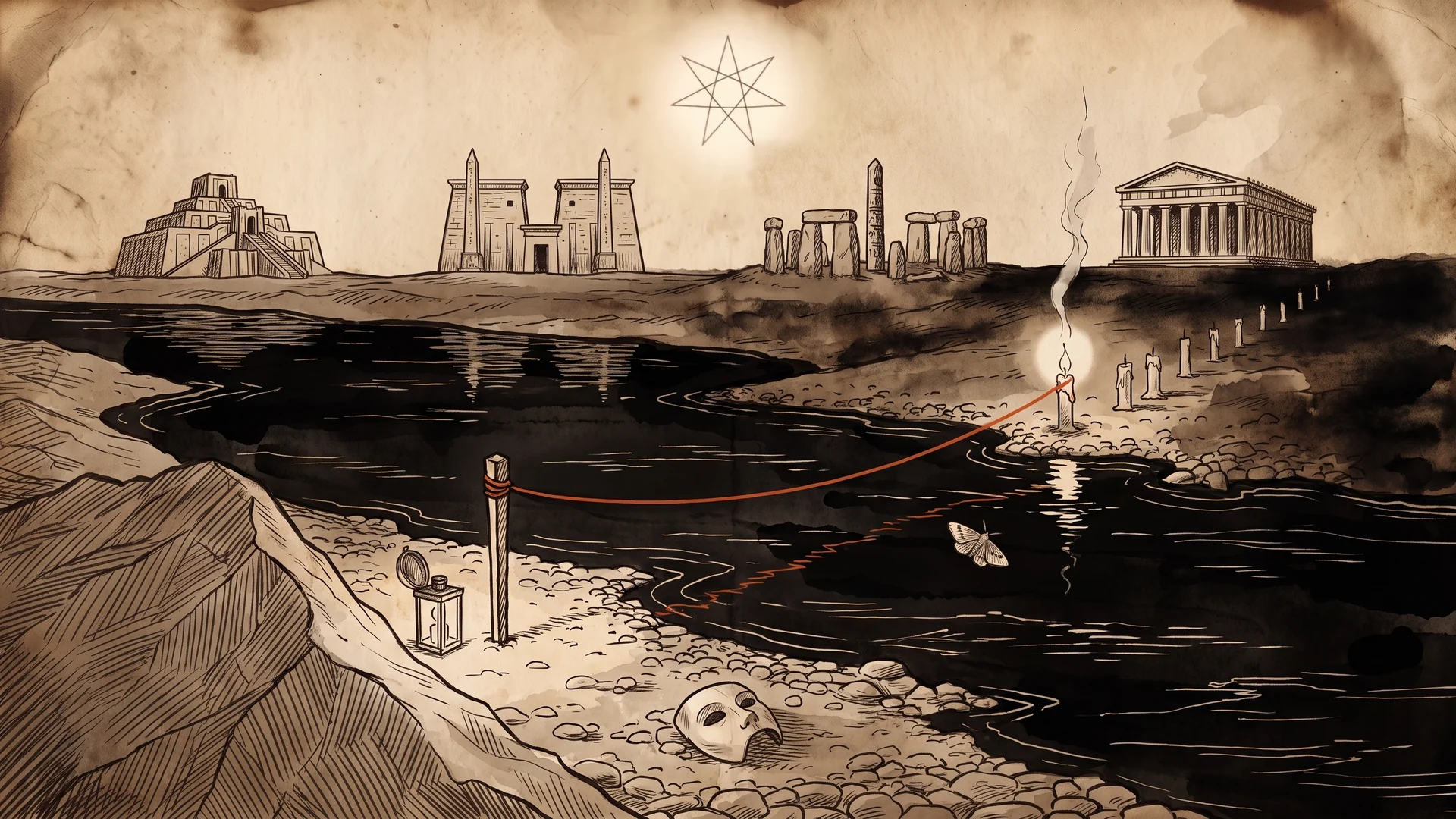
A temple with no address. It is raised wherever the candles are lit and struck when they gutter. Immersive ritual theatre, by invitation and by consent. I direct the program. It is on my map because it is the far edge of the work.
THREE STOPS DOWN THE BANK, THEN THE BORDERA temple that moves.
Kedesha comes from the Semitic root for sacred. A kedesha is a sacred woman; a kadesh, a sacred man. The temple that carries the name is a company of two hundred practitioners, immersive theatre makers, ritualists, researchers, who raise a realm for a handful of pilgrims, live inside it with them, and strike it when it is done. Four realms so far, each with its own face of the goddess. It has no home but the one it is building. So when they are together, they are home.
Five parts, and a word at the door.
Every realm is built in five movements: seduction before you arrive, arousal, ordeal, return, and the sending back into the ordinary world. Under the spectacle is the actual engineering: consent choreographed as carefully as the lighting, guardians whose only job is that consent, an application instead of a ticket, and an answer that comes back either way. Everyone who enters is twenty-five or older. The site sits behind a word. Not a trick: a boundary you can find in the ground.
I build the rooms and the rules.
My posting is Program Director at Teatro Korazon, the arts non-profit the temple lives inside. In practice I design the arc of a realm from the first invitation to the sending, I write the consent architecture the practitioners work inside, and I hold the room when the ordeal stops being theatre. It is the same kit I carry to the Table and the Fire, run at full flame. If an instrument is going to fail, it fails here first, in the dark, where I can see it.
Human better, together, has a far edge, and this is it. Everything on my map teaches the same motions: the welcome, the boundary, the apology, the room. The temple runs them at full intensity, with the lights low and the stakes real, among adults who chose to be there. Consent is not the fine print. It is the choreography. If those motions hold in the dark, with strangers, they will hold at your kitchen table. That is why I keep going back, and why the map needed a border.
Read the origins
The public page, and the only one you can reach without the word: where the name comes from, the five parts of every realm, the intention, and the ask. Twenty-five and older. Read it before you decide anything.
Cross to kedesha.orgTeatro Korazon
The 501(c)(3) arts non-profit the temple lives inside, and my posting as Program Director. If you would rather fund the work than walk it, this is the desk.
Meet the foundation